
Welding methods
Electrofusion welding (coupler welding): the joint controlled by the fitting
With an electrofusion fitting, the welding process is built into the fitting itself. Well-suited for narrow trenches, repairs and small diameters.
See all welding methods in the overview
The principle
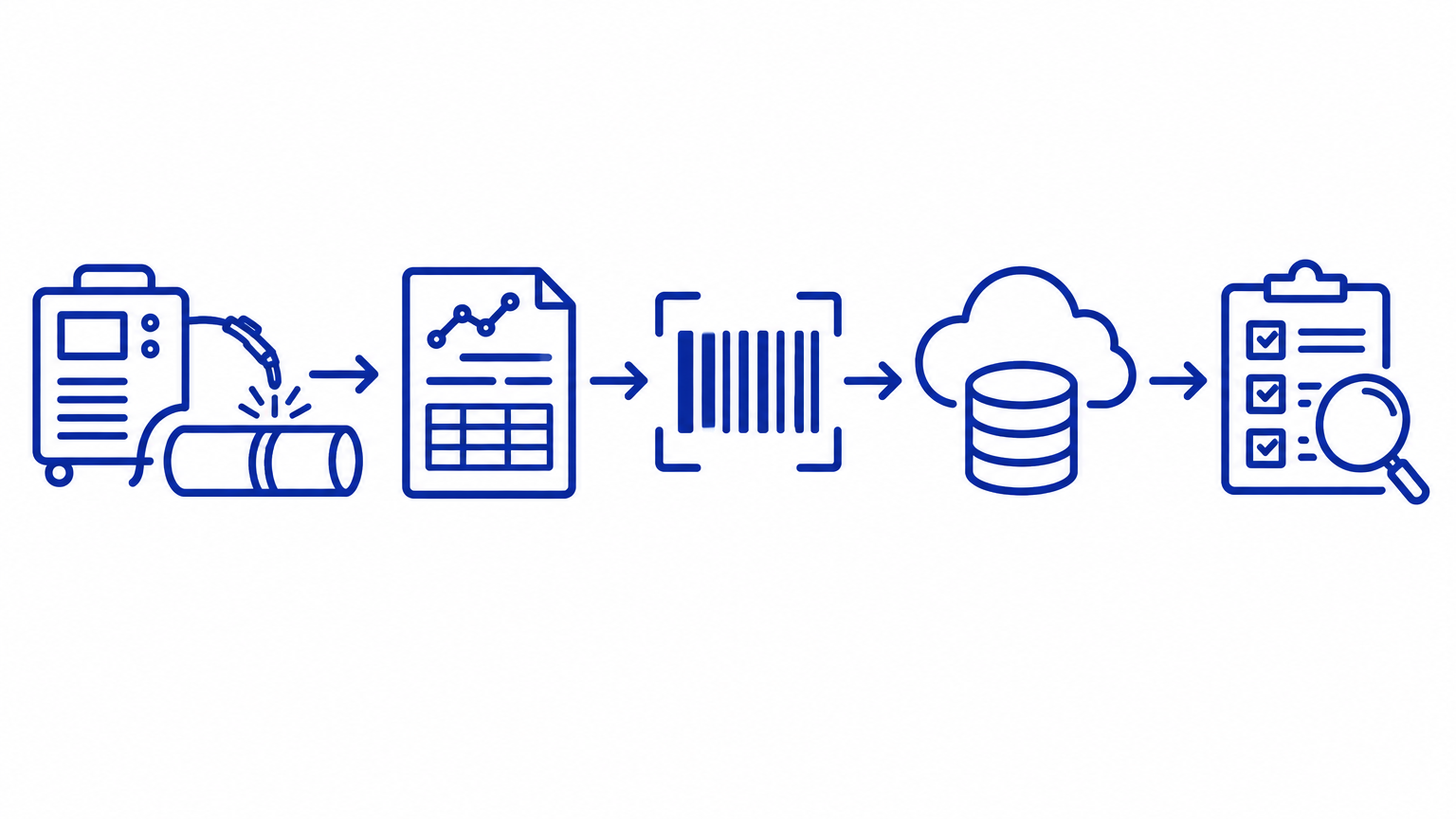
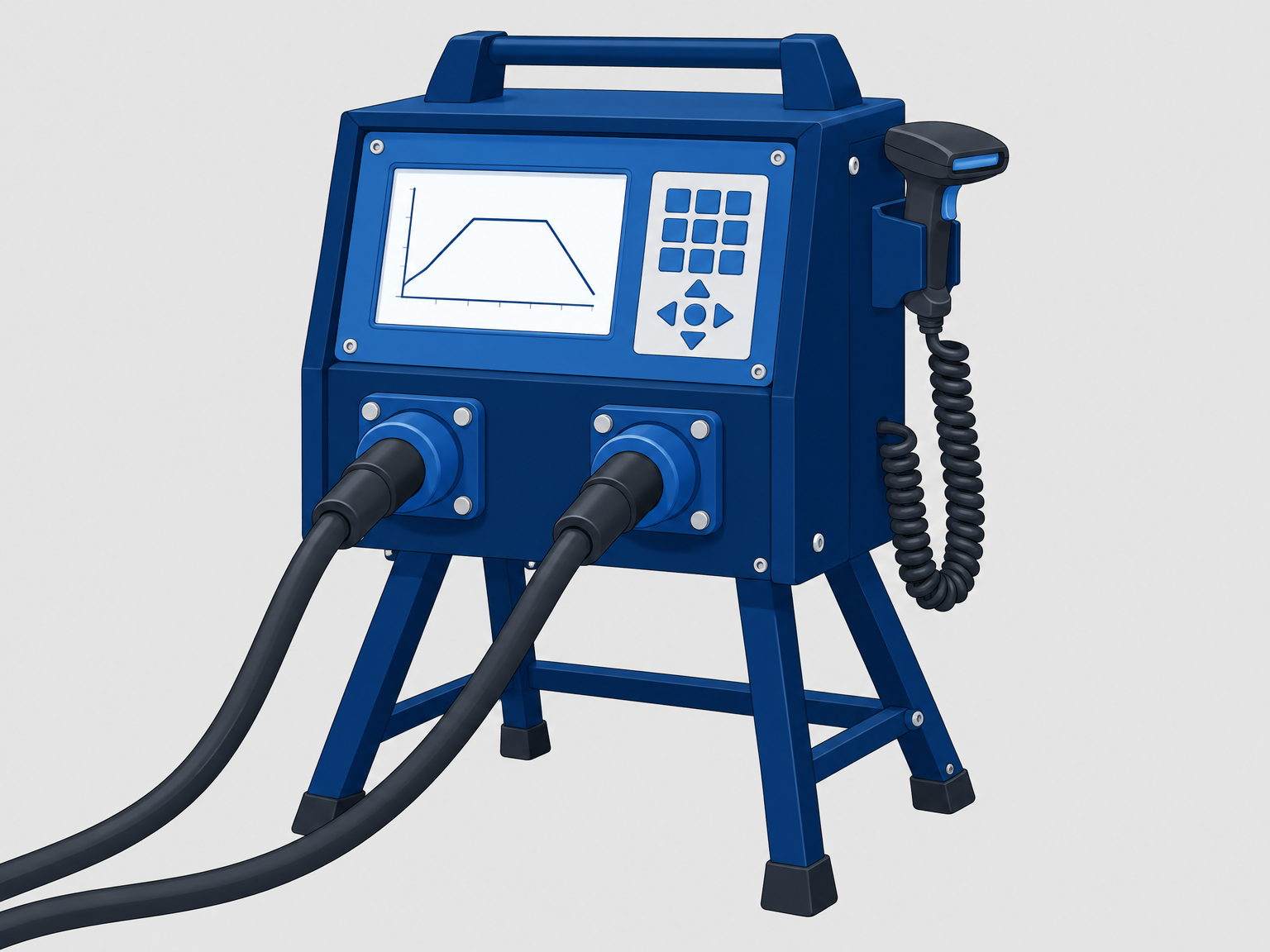
An electrofusion fitting (electrofusion coupler) has a built-in resistance wire coil. The welding unit reads the barcode of the fitting or inputs data, calculates the welding time and voltage, and the coil heats up the fitting and the pipe so that they fuse together. In English, the method is called electrofusion (EF).
The advantage is that the welding parameters are controlled by the fitting rather than the operator. This ensures high process reliability, even for less experienced operators.
When to choose the method?
Electrofusion fittings are ideal where space is restricted for a butt welding machine: in trenches, for repairs on existing pipelines and for smaller diameter runs. Unlike butt welding, electrofusion can often accommodate different SDR classes if the coupler is approved for the combination.
The pipe end must be cut square, deburred and cleaned. For PE 100-RC, the outer oxide layer must be scraped off (see the guide on PE 100-RC). Mark the insertion depth so that the fitting sits symmetrically, and support the pipe so that it does not move during welding.
If the branch or joint is to be made in small diameters where there is no space for an electrofusion coupler or no fitting exists for the combination, socket fusion using a heating element and loose fittings is the alternative.
If you are dealing with PVC-U, different conditions apply: lower heating element temperature, short changeover time and extraction. Read how in butt welding of PVC.
Data logging and quality assurance
Electrofusion welding is the method with the best built-in quality assurance. The machine reads the fitting's barcode or the parameters are entered manually, and it checks the resistance in the coil before welding starts. If the resistance is outside the tolerance or the voltage is too low, the machine refuses to weld. This prevents classic errors: incorrect fitting, soiled contacts and insufficient power supply.
During welding, the machine logs time, voltage, current and resistance, and after cooling, the weld is completed with an OK status or an error code. Modern electrofusion units store hundreds of joints internally and can export the log via USB, Bluetooth or documentation software. With GPS and operator ID, each joint is linked to the exact location and the certified welder who performed it.
The result is full traceability: for every joint in the system, you can present pipe and fitting batches, parameters, graph, location and operator. This is precisely the level of documentation that many utility companies and public tenders require, and which is almost free to collect when the equipment is chosen correctly.
Checklist: start-up and inspection
PE and PP with electrofusion sockets. Parameters are read from the fitting's barcode.
Before startup
- The fitting fits the pipe diameter and SDR, and the combination is approved.
- The pipe end is cut square, deburred and cleaned, and the oxide layer is scraped for PE100-RC.
- The insertion depth is marked, and the pipe is supported.
- Power supply or generator can supply the necessary power, and the voltage is stable.
First joint (test)
- The barcode has been scanned, or the parameters have been entered and confirmed.
- The machine has approved the resistance in the fitting's coil.
- The fitting is positioned symmetrically on the pipe.
During welding
- Pipe and fitting are not moved, and the cables are not pulled.
- The machine displays the process without interruptions.
After the joint
- Status is OK. In case of an error code: the joint is scrapped and the error documented.
- Cooling is completed before the joint is subjected to load or pressure tested.
- The log is saved or exported.